
Essential Gardening Tools for Beginners: Top 10 Must-Haves
373 views
You don't need a shed full of expensive equipment to grow healthy plants. That's one of the biggest surprises for first-time gardeners.
The opposite mistake happens more often.
A beginner walks into a garden center, buys twenty different tools, then realizes half of them never leave the storage shelf. Meanwhile, the cheap hand trowel bends after digging the first stubborn patch of clay, and pruning shears become frustratingly dull before spring is over.
I've watched that cycle repeat countless times. Most gardens—whether they're a few herb pots on a balcony or several raised beds—depend on a surprisingly small collection of reliable tools. Buy those well, and they'll last for years.
Let's start with the essentials.
Why quality matters more than quantity
Gardening tools don't fail during easy jobs. They fail exactly when you need them most.
Digging through compacted soil. Cutting an old rose cane. Pulling out deep-rooted weeds after several days without rain.
That doesn't mean you need premium professional equipment, but it does mean avoiding bargain-bin tools made from thin stamped metal with plastic handles that flex under pressure.
Look for:
Stainless steel or forged carbon steel working ends
Hardwood, fiberglass, or reinforced composite handles
Replaceable blades where possible
Comfortable grips that fit your hand
Expect to spend roughly US$10–25 for quality hand tools and US$30–80 for larger digging tools. Many reputable brands—including Fiskars, Corona, Spear & Jackson, Burgon & Ball, and DeWit—offer warranties ranging from five years to lifetime coverage depending on the product.
1. Hand trowel
If gardening had a universal tool, this would be it.
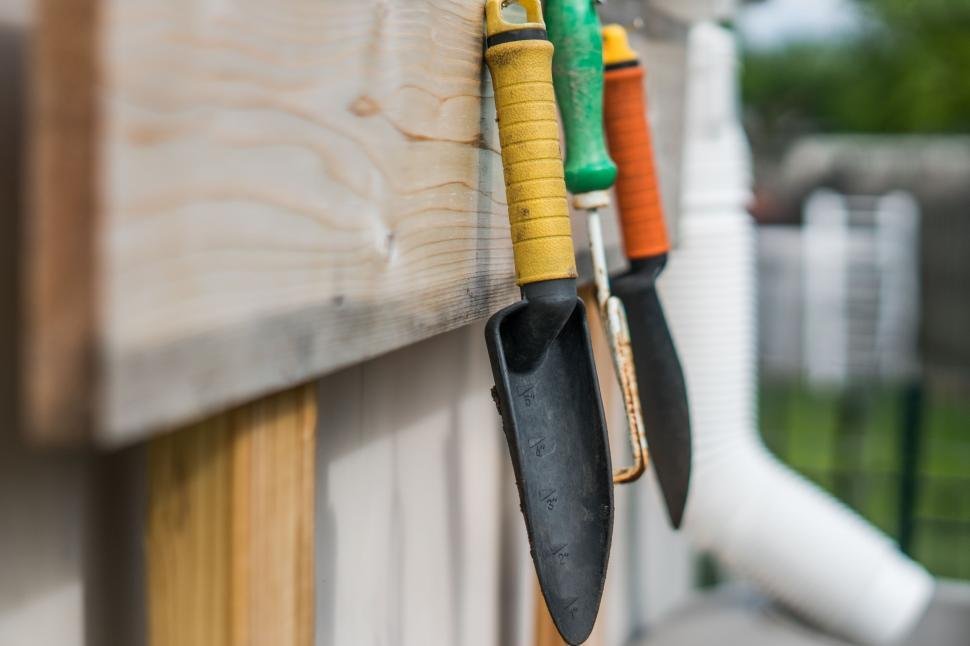
A sturdy hand trowel handles transplanting seedlings, digging planting holes, mixing compost into containers, removing weeds, and dividing small perennials.
Cheap versions often bend where the blade meets the handle. That's especially noticeable in heavy clay soils.
A forged stainless-steel blade usually resists rust better than painted carbon steel, although carbon steel often stays sharper longer if properly maintained.
Best for:
Planting flowers
Moving vegetable seedlings
Potting containers
Digging bulbs
A blade around 6–7 inches (15–18 cm) offers enough reach without becoming awkward.
2. Bypass pruning shears
Don't confuse bypass pruners with anvil pruners.
There's a difference.
Bypass pruners use two curved blades that slide past each other like scissors. They create cleaner cuts on living stems, reducing damage and helping plants heal faster. Horticultural guidance from university extension services consistently recommends bypass pruners for live wood, while anvil pruners work better on dry, dead branches.
Look for models capable of cutting branches up to ¾ inch (about 20 mm) thick.
One overlooked detail? Replacement springs.
Those tiny springs disappear surprisingly often after several seasons of use.
3. Garden gloves
You'll eventually discover why experienced gardeners own more than one pair.
Thin nitrile-coated gloves provide excellent dexterity for seed sowing and transplanting.
Leather gloves protect against thorns, rough bark, and splinters.
Waterproof gloves become invaluable during rainy weeks when soil stays saturated.
Instead of buying one expensive "all-purpose" glove, many gardeners keep two inexpensive pairs and switch depending on the task.
Comfort wins every time.
Soil work changes everything
Healthy soil grows healthy plants.
The tools below make maintaining that soil much easier.
4. Garden fork
A garden fork often loosens compacted ground better than a shovel.
The tines penetrate dense soil while causing less disruption to beneficial soil structure than aggressive tilling. That's one reason no-dig gardening methods have gained popularity among home gardeners over the last decade.
Use it for:
Aerating beds
Turning compost
Breaking compacted soil
Harvesting root vegetables like potatoes
Forged steel tines resist bending far better than welded budget models.
5. Digging spade
Some jobs simply require muscle.
A digging spade cuts neat planting holes, creates bed edges, slices through turf, and removes stubborn roots.
Choose a blade with a flat cutting edge rather than a pointed shovel if your primary focus is maintaining garden beds.
Handle length matters more than many beginners realize.
If you're around average height, a standard 28–32 inch shaft usually feels comfortable. Taller gardeners often prefer long-handled versions to reduce lower-back strain during extended digging sessions.
6. Watering can or garden hose
Plants don't care how expensive your irrigation system is.
They care about consistent watering.
A 2-gallon (roughly 7.5-liter) watering can works well for container gardens and patios.
Larger vegetable gardens quickly become exhausting without a hose.
Modern expandable hoses save storage space but generally don't last as long as reinforced rubber or hybrid polymer hoses. If durability matters, expect quality rubber hoses to cost around US$40–70 depending on length.
Don't forget the nozzle.
Adjustable spray settings help prevent washing away young seedlings while still delivering enough pressure to clean muddy tools.
Measuring isn't just for professionals
Spacing mistakes happen constantly.
Seed packets might recommend planting lettuce 8 inches apart, carrots 2 inches apart, or tomatoes 24–36 inches apart depending on the variety.
Guessing usually leads to overcrowding.
7. Measuring tape and garden line
This isn't glamorous.
It works.
A simple measuring tape combined with garden twine helps create straight planting rows, evenly spaced raised beds, and properly aligned fence posts.
The result isn't only prettier.
Better spacing improves airflow, reducing fungal diseases like powdery mildew that thrive in crowded conditions.
8. Weeding tool
Every gardener eventually develops a personal rivalry with weeds.
Mine was dandelions.
Pulling the leaves does almost nothing because the taproot remains underground. A narrow weeding tool or dandelion digger reaches below the crown and removes the entire root with much less effort.
That small investment saves hours over a growing season.
Especially after spring rain.
A wheelbarrow isn't always necessary
Surprised?
For tiny gardens, perhaps not.
Large vegetable plots tell a different story.
9. Garden cart or wheelbarrow
Moving ten bags of compost by hand gets old very quickly.
Wheelbarrows excel on uneven terrain.
Four-wheel garden carts tend to be more stable on flat surfaces and often carry heavier loads without tipping. Many residential models support 300–600 pounds (136–272 kg) depending on construction.
If storage space is limited, folding garden carts have become increasingly common, though they generally handle smaller loads.
10. Garden rake
Different rakes serve different purposes.
Leaf rakes gather debris.
Bow rakes level soil and spread mulch.
That's worth remembering before making a purchase.
For beginners, a lightweight bow rake often provides the greatest versatility. It smooths seedbeds, distributes compost, levels gravel, and breaks apart soil clumps before planting.
Simple. Reliable. Frequently used.
A few maintenance habits most beginners overlook
Tools last dramatically longer with very little effort.
Try this routine:
Brush soil off after every gardening session.
Dry metal surfaces before storing them.
Sharpen pruning blades once or twice each growing season.
Carbon steel benefits from a light coating of mineral oil or camellia oil before winter storage to reduce rust. Wooden handles also appreciate occasional linseed oil treatment, helping prevent drying and cracking.
Avoid leaving tools outdoors overnight.
Morning dew causes more corrosion than many people expect.
Quick comparison
Tool | Primary Job | Typical Beginner Price |
|---|---|---|
Hand trowel | Planting and transplanting | US$10–25 |
Bypass pruners | Cutting live stems | US$20–50 |
Garden gloves | Hand protection | US$10–30 |
Garden fork | Loosening soil | US$35–70 |
Digging spade | Digging and edging | US$30–80 |
Watering can | Irrigation | US$15–40 |
Measuring tape & line | Plant spacing | US$10–20 |
Weeding tool | Removing deep-rooted weeds | US$10–25 |
Garden cart/wheelbarrow | Transporting materials | US$70–180 |
Bow rake | Leveling and soil preparation | US$25–60 |
FAQs
Do I need all 10 gardening tools right away?
Not necessarily. A hand trowel, pruning shears, gloves, watering can, and digging spade cover most beginner gardening tasks. Add specialized tools as your garden expands.
Is stainless steel better than carbon steel?
Each has strengths. Stainless steel resists rust and needs less maintenance. Carbon steel usually holds a sharper edge longer but requires regular cleaning and oiling to prevent corrosion.
What's the biggest mistake beginners make when buying tools?
Buying very cheap tools that bend, rust, or break within a season. Spending slightly more on durable tools often saves money over several years because replacements aren't needed nearly as often.
Should I buy battery-powered gardening tools?
Only if your garden justifies them. Small gardens rarely need cordless hedge trimmers or cultivators. Hand tools remain faster, quieter, require no charging, and handle most everyday maintenance.
How should gardening tools be stored?
Keep them clean, dry, and protected from rain. Hanging larger tools on wall hooks improves airflow, prevents blade damage, and makes them easier to find during busy planting seasons.
Build your collection one season at a time
Gardens evolve.
The tool kit that feels perfect for a small herb planter probably won't be enough once you've added raised vegetable beds, fruit bushes, or climbing roses. Resist the urge to buy everything at once. Start with dependable basics, learn which jobs you perform most often, then upgrade selectively. A handful of well-made tools used regularly will accomplish far more than an overcrowded shed filled with gadgets that rarely touch the soil.
beginner gardening tools
essential gardening tools
gardening tools for beginners
garden tool kit
must have garden tools
home gardening tips
basic gardening equipment
gardening essentials
starter gardening tools
gardening guide
Found this helpful? Share it!