
What I Learned Growing a Calathea in Dry Air
9 views
The first sign wasn't dramatic. Just a few brown tips.
I watered the Calathea. Checked the soil. Moved it away from the window. A week later, the edges looked worse—dry, papery, almost singed.
That was my mistake: I was treating the plant's symptoms instead of the room.
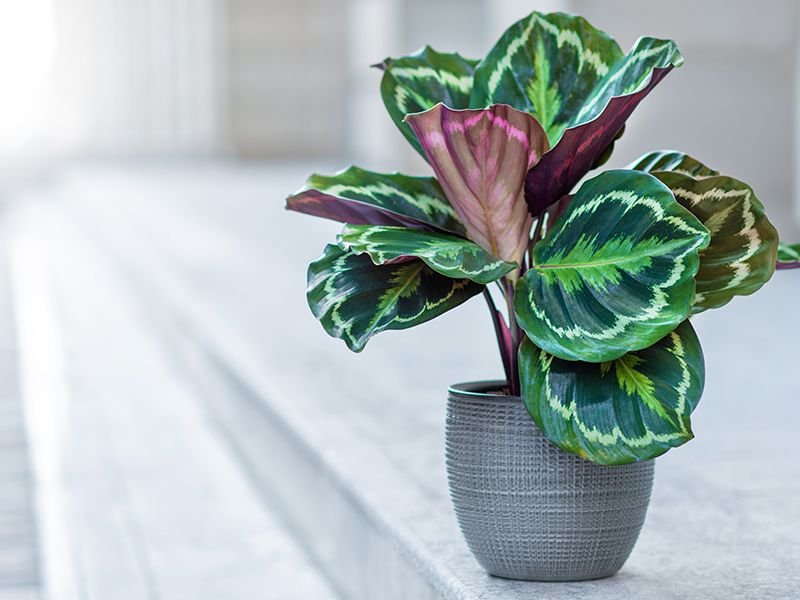
Calatheas, now largely classified within the genus Goeppertia, come from humid tropical environments. Indoors, they're often asked to tolerate conditions that are nothing like that: air conditioning, heating, drafts, low winter humidity, inconsistent watering, and mineral-heavy tap water. The result can be a plant that looks "fussy" when the real problem is surprisingly specific.
After enough trial and error, I stopped trying to make my Calathea adapt to dry air and started managing the environment around it.
That changed everything.
Dry air was the problem I kept missing
My first instinct was more water.
It made sense on the surface. Brown leaves looked dry, so surely the plant needed more moisture.
Not quite.
Humidity and soil moisture aren't interchangeable. Relative humidity affects how quickly water is lost through the leaves, while the roots need oxygen as well as moisture. If the air is very dry, a Calathea can lose water from its foliage rapidly even when the potting mix is still damp. The RHS specifically identifies brown leaf tips and edges on Calatheas as a common symptom of low humidity.
That distinction saved my plant.
Instead of watering every time a leaf curled, I started checking two separate things:
How moist is the potting mix?
How dry is the surrounding air?
Those are different questions.
A Calathea sitting in soggy compost doesn't need another drink simply because its leaf margins are crispy. In fact, repeatedly watering an already-wet root system can create an entirely new problem.
I bought a hygrometer. I should have done it sooner.
A small digital hygrometer turned an argument with myself into a number.
In a dry room, relative humidity can sit around 30–40% without feeling particularly unusual to a person. Tropical foliage plants have a different experience. University of New Hampshire Extension notes that many tropical species prefer considerably higher humidity than the roughly 40–60% range suitable for many ordinary houseplants.
For my Calathea, I found that trying to keep the immediate growing area around 50–60% RH or higher produced much better foliage than allowing the room to swing dramatically between dry and humid conditions. The RHS also recommends high humidity for Calatheas, while UF/IFAS reports that Calatheas maintain their appearance well around 40–60% relative humidity in interiorscape conditions.
The number wasn't magic.
Consistency mattered more than chasing 80%.
The humidifier helped—but placement mattered
This was another little lesson.
I'd put the humidifier across the room, watch its display climb, and assume the Calathea was benefiting.
It wasn't getting much of that moisture.
UNH Extension recommends positioning a portable humidifier close to plants because the effect becomes less useful in larger rooms.
I eventually placed mine near—but not directly against—the plant, where its output could mix with the surrounding air without blasting constantly wet air at one section of foliage.
That distinction matters.
A humidifier isn't supposed to turn the leaves into wet towels. It's there to raise ambient relative humidity.
I also learned to check the hygrometer at the plant's actual location, rather than trusting the humidity reading on a humidifier sitting several feet away.
What about misting?
I tried it.
It felt productive. The leaves looked beautiful for about five minutes.
Then they dried.
Extension guidance backs up that experience: misting produces only a temporary humidity increase, while a humidifier or other environmental change provides a more meaningful improvement.
So I don't consider misting a serious solution to chronically dry indoor air. It can be a pleasant maintenance ritual, but it isn't how I'd rescue a Calathea living beside a heater.
I stopped watering on a calendar
This was probably the second biggest improvement.
My old routine was something like, "It's been seven days, so it must be thirsty."
Plants don't read calendars.
RHS guidance recommends checking the compost rather than watering automatically, and Extension advice similarly emphasizes that watering frequency changes with season, temperature, pot size, roots and potting mix.
I began checking the upper layer of the mix with my finger and lifting the pot to judge its weight. When the surface had dried somewhat but the root zone wasn't bone-dry, I watered thoroughly and allowed excess water to drain.
Then I emptied the saucer.
That last step is boring. It also matters.
A Calathea needs moisture, but "moist" isn't the same thing as permanently saturated. Roots sitting in stagnant water can deteriorate even while the leaves are simultaneously showing drought-like symptoms.
That contradiction fooled me for a while.
Water quality turned out to be part of the mystery
Then there was the tap water.
Calatheas have a reputation for developing brown tips, and dry air isn't always the sole culprit. RHS specifically notes that Calatheas can be sensitive to fluoride and chlorine in tap water and recommends filtered, distilled or rainwater where appropriate.
An Extension response to a Calathea ornata owner with hard water likewise suggested distilled, rain or filtered water as alternatives.
I wouldn't automatically blame every brown leaf on tap water. That would be too simplistic.
But if you've fixed humidity and watering and the newest leaves are still developing scorched-looking tips, water quality deserves investigation.
A useful clue is the combination of brown margins plus mineral residue around the pot or soil surface.
That's when I'd start looking at the water rather than immediately buying another bag of potting mix.
Light was the quiet variable
Dry air wasn't operating alone.
I had also underestimated light.
Calatheas prefer bright, indirect conditions. Direct sun can scorch or fade the foliage, but excessively dark conditions can slow growth and change how quickly the plant uses water. RHS recommends bright indirect light and notes that direct exposure can damage susceptible houseplants.
My sweet spot was a bright room where the plant received plenty of ambient daylight without sitting in harsh midday sun.
That mattered because watering and humidity can't be separated entirely from light.
A plant growing slowly in dim conditions may use water differently from one actively producing leaves in brighter indirect light. The same watering routine can therefore work in July and fail badly in January.
The calendar isn't the variable. The environment is.
I also moved it away from invisible drafts
One of my Calatheas sat near an air-conditioning vent.
The room humidity reading looked acceptable.
The plant disagreed.
RHS recommends keeping Calatheas away from drafts and direct heat sources, with temperatures around 16–21°C (61–70°F) in its general growing guidance.
A stream of conditioned air can create a much harsher microclimate around leaves than the room's average hygrometer reading suggests.
The same applies to:
radiators
heating vents
exterior doors
cold windows
strong fans
air-conditioning outlets
You don't need to create a sealed greenhouse. You just need to stop putting a tropical understory plant in the path of a miniature weather system.
What actually worked for me
After several failed tweaks, I ended up with a much simpler routine.
Problem | What I changed | What I watched |
|---|---|---|
Brown tips | Raised ambient humidity | New leaf margins |
Curling leaves | Checked humidity and soil separately | Whether curling persisted |
Rapidly drying mix | Evaluated pot size and airflow | Pot weight between waterings |
Possible mineral damage | Changed water source | New growth |
Crispy patches | Moved away from direct sun | Leaf color and texture |
Draft stress | Moved away from AC/heating | Curling and edge damage |
I didn't try to perfect every variable simultaneously.
That would've made troubleshooting impossible.
Instead, I changed one major environmental factor, watched the new growth, and gave the plant time to respond. Old damaged tissue won't magically turn green again. The useful evidence is what happens next.
A few things I wouldn't bother overdoing
Pebble trays are fine, but don't expect miracles.
The RHS recommends trays containing damp gravel or clay granules as one way to create a more humid local microclimate.
I think of that as supplemental humidity, not a substitute for a humidifier in an exceptionally dry room.
Plant grouping can help, too. Several plants transpiring into the same small area can create a modestly more humid pocket, and RHS recommends grouping plants as one humidity strategy.
But there's a practical ceiling.
If your room is sitting at 30% RH, six plants aren't necessarily going to transform it into a rainforest.
And I wouldn't cram them together so tightly that air circulation disappears. Persistent wet foliage combined with poor airflow can increase the risk of leaf-spot problems; good ventilation remains part of healthy houseplant care.
FAQ: Calathea care in dry air
What humidity does a Calathea need?
Calatheas generally perform best in moderate to high humidity. A practical indoor target is around 50–60% RH or higher, particularly for plants showing crispy margins. RHS recommends high humidity, while UF/IFAS reports good interior appearance at 40–60% RH.
Don't obsess over hitting one exact percentage. Avoiding prolonged, very dry conditions is the bigger win.
Can a Calathea survive in 30% humidity?
It can survive, but that doesn't mean it will look good.
Persistently dry air can contribute to brown leaf edges, curling and general foliage stress. If you can't raise whole-room humidity, moving the plant away from heat and AC vents, grouping plants, and creating a more humid local environment can help.
Does misting actually help Calatheas?
Only temporarily.
Misting can briefly raise humidity directly around the foliage, but it doesn't provide the sustained environmental change that a humidifier can. Extension guidance specifically points out how impractical frequent misting would be if it were the only way to maintain substantially higher humidity.
Why are my Calathea leaves brown even though the soil is wet?
That combination is exactly why I stopped treating brown tips as a simple watering signal.
Dry air, unsuitable water quality, direct sun, drafts and root problems can all produce stressed foliage. Check humidity, drainage, light, temperature and water quality separately rather than automatically adding more water.
Should I cut off brown Calathea leaves?
If a leaf is badly damaged, removing it can improve the plant's appearance and eliminate dying tissue. But pruning won't solve the underlying problem.
I wait until I've corrected the growing conditions first. Then I trim heavily damaged foliage with clean scissors and judge success by the next leaves.
The lesson I'd keep
Growing a Calathea in dry air taught me something broader than how to keep one particular houseplant alive.
Stop watering symptoms. Start reading the environment.
If the humidity is low, fix the air. If the soil is wet, don't add water just because the leaf tips are brown. If the tap water is problematic, change the water source. If the plant is sitting beneath an AC vent, move it.
Small changes.
Then patience.
The damaged leaves may stay damaged, and that's fine. I'm much more interested in the next leaf—whether it unfurls cleanly, holds its color, and keeps those margins intact. That's the real report card.
And if your Calathea is currently sitting beside a heater with crispy edges, I'd start with one inexpensive purchase: a hygrometer. Measure the room before you start changing everything else. You may discover that the plant isn't nearly as mysterious as it first appeared.
calathea care dry air
calathea humidity requirements
calathea brown leaf edges
calathea watering
calathea indirect light
calathea indoor care
Found this helpful? Share it!