
Essential Indoor Gardening Tools for Beginners
441 views
A surprising number of beginner houseplants don't die because of a lack of sunlight. They fail because of tiny, preventable mistakes. Soil stays soggy for too long. Roots sit in pots without drainage. A watering can dumps far more water than the plant actually needs. I've watched people spend $50 on beautiful plants, then try to care for them with a random kitchen cup and a dull pair of scissors.
That usually doesn't end well.
The good news? You don't need a room full of expensive equipment. A handful of well-chosen tools will make plant care easier, cleaner, and far more predictable. Better yet, most of these tools last for years if you buy decent quality instead of the cheapest option on the shelf.
Start Small, Not Cheap
There's a difference.
Buying every gadget marketed to plant lovers often leads to clutter. Buying poorly made essentials usually means replacing them within a season. My first pruning scissors developed rust after only a few months because I never cleaned the blades after trimming moisture-rich stems. Lesson learned.
A beginner toolkit should solve everyday problems:
Watering accurately
Repotting without making a mess
Monitoring moisture
Trimming damaged growth
Protecting roots
Everything else can wait.
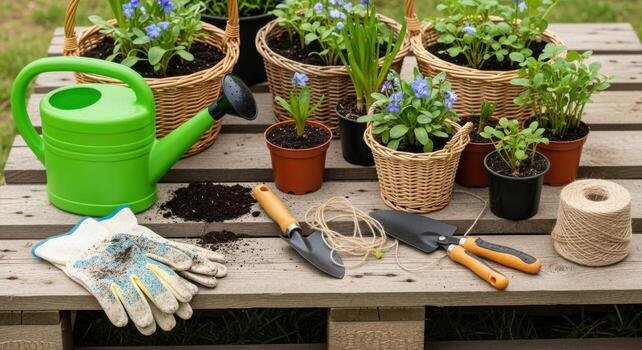
Watering Can: Control Beats Capacity
A watering can isn't just a container with a spout.
The shape matters.
Long-neck watering cans allow you to direct water beneath foliage instead of soaking leaves unnecessarily. That's especially useful for plants like African violets, where consistently wet leaves may encourage fungal problems.
Indoor watering cans usually range from 1 to 2 liters, making them easier to handle than outdoor models. Stainless steel versions resist rust and generally last longer than painted steel. Plastic options weigh less and cost less, typically around $8–20 USD, while quality stainless steel models often fall between $25–50 USD.
One mistake beginners make? Pouring water quickly.
Slow watering gives potting mix time to absorb moisture instead of letting water run down gaps along the pot's edges.
Pruning Shears Aren't Just for Looks
Dead leaves don't magically disappear.
They become places where mold and pests can settle.
Small bypass pruning shears are designed to make clean cuts instead of crushing stems. Look for stainless steel blades with a spring-loaded handle. The blades should close tightly without gaps.
Skip oversized garden pruners.
Indoor plants rarely need them.
After every trimming session, wiping blades with 70% isopropyl alcohol helps reduce the chance of transferring bacteria or fungal pathogens between plants. Commercial growers follow similar sanitation practices because disease spreads surprisingly easily through contaminated cutting tools.
A Soil Scoop Saves More Than Your Floor
Repotting by hand sounds simple.
Until half the potting mix lands on your table.
A narrow soil scoop or transplanting shovel lets you guide fresh mix exactly where it belongs, especially when working with compact pots under 20 cm in diameter.
Plastic scoops are inexpensive and lightweight, but aluminum versions generally hold up better if you're mixing chunky substrates containing bark, pumice, or coarse perlite.
Mess matters more than people think. Less spilled soil means fewer fungus gnats attracted to damp organic debris around your growing area.
Moisture Meter: Helpful, But Not Magic
Many beginners water on a schedule.
Plants don't.
That's where moisture meters come in.
Most affordable analog meters use metal probes to measure electrical conductivity through moist soil. They don't contain batteries, and many combine moisture readings with rough pH or light estimates.
Here's the catch.
They're only reasonably accurate when inserted into the root zone and used in regular potting mix. Chunky orchid bark, LECA, or highly aerated aroid mixes often produce inconsistent readings.
Treat the meter as a second opinion rather than absolute truth.
I still stick a finger about 2–3 cm into the soil before watering. Old-fashioned, yes. Surprisingly reliable too.
Grow Lights Can Replace Weak Windows
Some apartments simply don't receive enough natural light.
North-facing windows, shaded balconies, or offices with tinted glass often struggle to provide enough brightness for many tropical houseplants.
Modern LED grow lights have become dramatically more efficient than older fluorescent systems.
A few practical specifications worth knowing:
Feature | Beginner Recommendation |
|---|---|
Light Type | Full-spectrum LED |
Color Temperature | Around 5000K–6500K |
Daily Runtime | 10–14 hours |
Distance From Plant | Usually 20–45 cm (varies by manufacturer) |
Power | 20–40W for small indoor collections |
Many current LED fixtures include built-in timers offering 3-, 6-, and 12-hour cycles, reducing the need to remember daily switching.
Don't assume brighter is always better.
Leaves sitting just a few centimeters beneath high-output LEDs may bleach even if the light itself feels cool.
Spray Bottles Have a Place—Just Not Everywhere
Social media made misting fashionable.
Reality is more complicated.
Occasional misting may temporarily raise humidity around foliage for a few minutes, but research and guidance from botanical gardens generally agree that it doesn't significantly increase room humidity for long periods.
Still useful?
Absolutely.
Spray bottles work well for:
Cleaning dusty leaves
Applying insecticidal soap
Neem oil treatments
Diluted foliar fertilizers when recommended
A bottle with adjustable nozzle settings offers much better control than fixed mist sprayers.
Gloves: Optional Until They Aren't
Many indoor plants are perfectly safe to handle.
Others aren't quite so friendly.
Species like Euphorbia produce irritating sap. Cacti introduce a different problem entirely. Tiny glochids can stay embedded in skin for days.
Thin nitrile-coated gardening gloves provide decent grip while maintaining enough dexterity to handle delicate roots.
Bulky leather gloves?
Probably unnecessary indoors.
Don't Ignore Drainage Trays
They're boring.
They're also one of the most overlooked purchases.
Drainage trays prevent excess water from soaking shelves, hardwood floors, and furniture. Transparent saucers also make it easier to notice standing water after irrigation.
Never leave pots sitting in water for extended periods unless you're growing species specifically adapted to wet conditions.
Roots need oxygen every bit as much as moisture.
Potting Mix Is a Tool Too
People tend to think only about containers.
The growing medium deserves equal attention.
A standard indoor potting mix usually contains combinations of:
Peat moss or coco coir
Perlite
Compost
Pine bark
Wetting agents
Different plants demand different textures.
Succulents benefit from faster-draining mixes with additional coarse sand or pumice. Monsteras and philodendrons appreciate chunky bark blends that improve airflow around roots.
One universal mix rarely performs equally well across every species.
Digital Thermometer and Hygrometer
Guessing indoor humidity isn't very productive.
Small digital hygrometers now cost around $10–25 USD and display both temperature and relative humidity.
Most common tropical houseplants grow comfortably between 40% and 60% relative humidity, although some species such as calatheas often appreciate higher levels.
Seeing actual numbers changes how you manage your growing space.
A room that feels humid to you might still measure only 32%.
Storage Makes Plant Care Easier
This sounds trivial.
It isn't.
Keeping scissors in one drawer, fertilizer somewhere else, and moisture meters buried inside random cabinets turns simple maintenance into an annoying scavenger hunt.
A compact plastic caddy keeps everything together.
Plant care becomes something you actually do instead of something you postpone.
Building a Beginner Kit Without Overspending
Not every purchase deserves equal priority.
Priority | Tool | Typical Price (USD) |
|---|---|---|
Essential | Watering can | $8–30 |
Essential | Pruning shears | $12–35 |
Essential | Soil scoop | $5–15 |
Essential | Drainage trays | $2–10 each |
Helpful | Moisture meter | $10–25 |
Helpful | Hygrometer | $10–25 |
Helpful | Spray bottle | $5–15 |
Optional | Grow light | $20–80 |
A practical starter kit often costs under $75 if you already have suitable pots.
That's considerably cheaper than repeatedly replacing unhealthy plants.
Maintenance Matters More Than People Expect
Good tools slowly become bad tools without basic care.
Sharpen pruning blades once or twice a year if you use them regularly. Dry metal tools before storing them. Empty standing water from watering cans every few weeks to reduce mineral buildup, especially if your tap water has high hardness.
LED grow lights also collect surprising amounts of dust.
A dirty light loses brightness over time because dust blocks part of the emitted light. Wiping fixtures every month helps maintain consistent output.
Tiny habits.
Big difference.
Frequently Asked Questions
Do beginners really need a moisture meter?
No. You can successfully grow many houseplants using the finger test alone. Moisture meters simply provide extra confidence while you're learning how different soils dry over time.
What's the most useful first purchase?
A quality watering can with a narrow spout usually provides the biggest immediate improvement. Accurate watering prevents more beginner mistakes than almost any other tool.
Can ordinary desk lamps replace grow lights?
Usually not. Standard LED desk lamps are designed for human vision rather than efficient plant growth. Full-spectrum grow lights provide a much more suitable intensity and spectral output for indoor plants.
How often should pruning shears be cleaned?
After trimming unhealthy plants, clean them immediately using 70% isopropyl alcohol. Even healthy plants benefit from routine blade cleaning after each gardening session.
Is expensive equipment necessary for healthy houseplants?
Not at all. Reliable basic tools outperform fancy gadgets that rarely get used. Focus on consistent watering, clean cuts, appropriate lighting, and well-draining soil before investing in specialized accessories.
Your Plants Will Tell You What Comes Next
The funny thing about indoor gardening is that the best purchases often become obvious only after you've cared for plants for a few months. You'll notice that one watering can reaches awkward corners better. One pair of shears feels right in your hand. One grow light covers an entire shelf while another leaves dark spots around the edges.
Begin with dependable essentials, use them consistently, and pay attention to how your plants respond. Experience fills in the gaps faster than any shopping list ever could.
indoor gardening tools
beginner gardening tools
indoor plant care
gardening essentials
home gardening
plant growing tools
indoor plants
gardening for beginners
plant care equipment
small space gardening
Found this helpful? Share it!