
Plant Propagation Guide: Simple Methods for Beginners
424 views
Buying every new plant can get expensive. Fast.
Most beginners discover that after filling a few windowsills or garden beds, the cost adds up surprisingly quickly. Then someone mentions propagation, and suddenly it sounds like magic—snip a stem, stick it in water, wait a few weeks, and you've got another plant.
Reality is slightly messier.
Some cuttings rot. Others sit for months doing absolutely nothing. A few grow roots overnight and make you wonder why the previous five failed. That's normal. Plant propagation is less about luck than understanding how different plants naturally reproduce.
Once you learn the basic methods, you can multiply your favorite houseplants, replace aging garden plants, and even share extras with friends without spending another dollar at the nursery.
What Plant Propagation Actually Means
Propagation simply means creating new plants from existing ones.
Commercial nurseries rely on propagation every day because growing every plant from seed would be slow, unpredictable, and expensive. Home gardeners use many of the same techniques, just on a smaller scale.
There are two broad categories:
Sexual Propagation | Asexual Propagation |
|---|---|
Uses seeds | Uses stems, roots, leaves, or divisions |
Produces genetic variation | Produces a clone of the parent plant |
Often takes longer | Usually faster for many species |
Best for vegetables, annual flowers, trees | Best for houseplants, shrubs, herbs, and many perennials |
Neither method is better. They simply solve different problems.
Start With Healthy Parent Plants
This step gets skipped far too often.
Taking cuttings from a stressed or diseased plant usually produces weak results. Even if roots eventually form, the young plant often struggles during its first few months.
Look for:
Bright, healthy foliage
Active new growth
No insect damage
No fungal spots
Strong stems that aren't brittle or mushy
Early morning is usually the best time to collect cuttings because stems contain more moisture before daytime heat causes water loss.
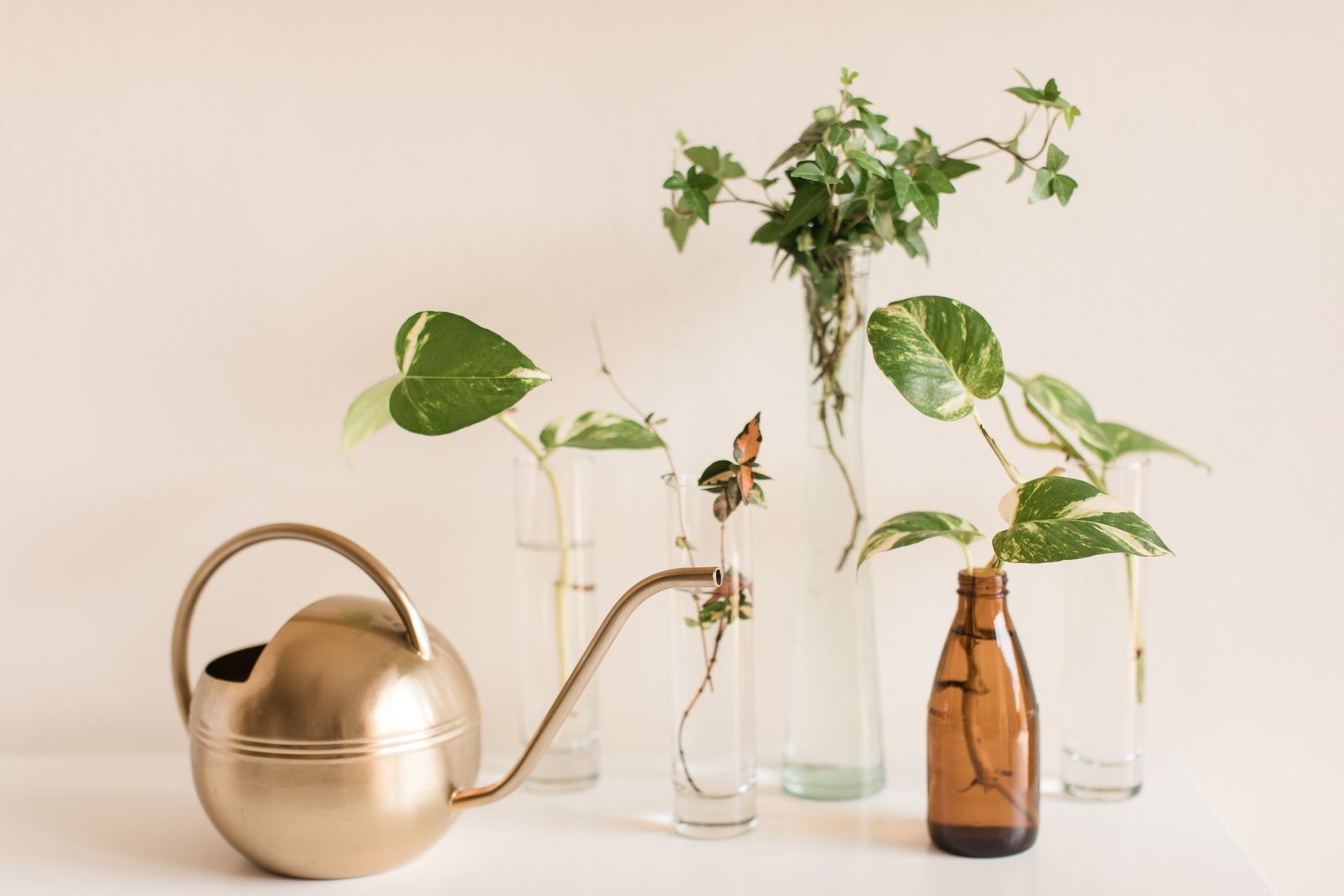
Stem Cuttings: The Easiest Place to Begin
If someone is completely new to propagation, stem cuttings are the obvious starting point.
Many popular indoor plants root surprisingly well this way.
Plants that commonly root from stem cuttings include:
Pothos
Heartleaf philodendron
Coleus
Mint
Basil
Tradescantia
Swedish ivy
The process is straightforward.
Cut just below a node—the small bump where leaves emerge. That's where new roots typically develop. Remove the lower leaves so they won't sit underwater or below the soil surface.
A cutting with one or two healthy nodes generally performs better than a very long stem.
Water or Soil?
Gardeners debate this constantly.
Water propagation lets you watch roots develop, making it ideal for beginners. It's also easier to spot problems before they become serious.
The downside?
Water-grown roots differ slightly from soil-grown roots. After transplanting, some cuttings need a week or two to adjust before vigorous growth resumes.
Soil propagation skips that transition but hides what's happening beneath the surface. Patience becomes essential.
For many common houseplants, either method works perfectly well.
Leaf Propagation Can Feel Like Magic
Some plants barely need encouragement.
A single healthy leaf can become an entirely new plant.
African violets, snake plants, jade plants, peperomias, and many succulents have this remarkable ability.
Succulents deserve one extra warning.
Freshly removed leaves shouldn't be watered immediately. The cut end needs several days to callus over first. Watering too early often leads to rot instead of roots.
That's a mistake almost everyone makes once.
Division: Fast Results With Almost No Waiting
Some plants naturally grow in clumps.
Instead of rooting new stems, simply separate the existing root system into multiple sections.
Hostas, ornamental grasses, peace lilies, daylilies, spider plants, and many ferns respond well to division.
Here's the basic process:
Lift the mature plant from its pot or garden bed.
Separate healthy sections, making sure each division has both roots and foliage.
That's it.
Many divided plants continue growing almost immediately because they already possess mature root systems.
Growing Plants From Seed
Seeds require more patience.
Sometimes much more.
Vegetables like tomatoes, peppers, lettuce, beans, cucumbers, and herbs are commonly started from seed because they produce reliably and remain relatively inexpensive.
Tree seeds and woody shrubs often present additional challenges.
Some require cold stratification, where seeds spend several weeks in moist, refrigerated conditions to simulate winter. Others possess hard seed coats that benefit from scarification, a process that gently weakens the outer shell so water can penetrate.
Nature developed these survival strategies over thousands of years.
Gardeners simply imitate them.
Rooting Hormone: Helpful, Not Mandatory
Many beginners assume rooting hormone is essential.
It isn't.
Soft plants like pothos or coleus usually root perfectly without it.
Woody shrubs tell a different story.
Products containing Indole-3-butyric acid (IBA)—commonly sold as rooting powder, liquid, or gel—can noticeably improve rooting percentages for roses, hydrangeas, figs, citrus, blueberries, and many ornamental shrubs.
Commercial propagation facilities frequently use carefully measured IBA concentrations because consistent rooting directly affects production efficiency.
For home gardeners, rooting hormone is best viewed as an optional tool rather than a requirement.
The Environment Matters More Than Fancy Equipment
Expensive propagation stations look attractive online.
They're rarely necessary.
Successful rooting depends far more on stable environmental conditions.
Factor | Ideal Range |
|---|---|
Temperature | 20–26°C (68–79°F) |
Humidity | 60–80% |
Light | Bright, indirect sunlight |
Soil moisture | Damp, never waterlogged |
Air movement | Gentle airflow |
Bright windows facing east often outperform hot south-facing windows where direct afternoon sunlight overheats delicate cuttings.
Outdoors, filtered shade usually produces better results than intense midday sun.
Common Mistakes Beginners Make
Most propagation failures trace back to a handful of avoidable problems.
Overwatering sits at the top of the list.
Roots require oxygen just as much as moisture. Constantly soaked soil encourages fungal diseases and root rot.
Dirty scissors create another issue. Pruners should be cleaned with 70% isopropyl alcohol or a diluted household bleach solution before taking cuttings, particularly when working with multiple plants. This reduces the spread of bacterial and fungal pathogens.
Another overlooked problem is impatience.
Some cuttings root within ten days.
Others need six or eight weeks.
Pulling them up every few days to "check" usually causes more harm than good.
Choosing the Right Growing Medium
Regular garden soil isn't the best option.
It compacts too easily.
Professional growers often rely on lightweight propagation media with excellent drainage and airflow.
Popular options include:
Coconut coir
Perlite
Vermiculite
Fine orchid bark
Peat-free seed-starting mixes
Many gardeners combine equal parts coco coir and perlite because the mixture stays moist without becoming waterlogged.
Commercial nurseries frequently use specialized propagation trays with drainage cells, but small nursery pots or recycled plastic containers work perfectly well if excess water can escape.
A Few Plants That Almost Anyone Can Propagate
Confidence grows quickly after a few successes.
Try one of these first:
Plant | Best Method | Typical Rooting Time |
|---|---|---|
Pothos | Stem cutting | 2–4 weeks |
Spider plant | Plantlets | Immediate transplant |
Mint | Stem cutting | 1–2 weeks |
Basil | Stem cutting | 1–3 weeks |
Coleus | Stem cutting | 1–2 weeks |
Snake plant | Leaf cutting | 4–8 weeks |
Jade plant | Leaf or stem | 3–6 weeks |
Peace lily | Division | Immediate growth |
Rooting times vary depending on temperature, light levels, humidity, and the plant's growing season.
Propagation Isn't Always Successful
Even experienced growers lose cuttings.
Sometimes healthy stems collapse without warning.
Occasionally an identical cutting, taken from the same plant on the same day, roots perfectly while another fails completely.
Plants are living organisms, not machines.
Seasonal growth cycles, hidden disease, humidity fluctuations, and simple genetics all influence the outcome.
Accepting a few failures makes the learning process much less frustrating.
Frequently Asked Questions
Can every plant grow from a cutting?
No. Many houseplants and shrubs root readily from cuttings, but others grow much more reliably from seed, grafting, layering, or division.
Should I change the water during water propagation?
Yes. Replacing the water every three to seven days helps maintain oxygen levels and reduces bacterial growth that can damage developing roots.
Is direct sunlight good for fresh cuttings?
Usually not. Bright, indirect light encourages rooting while reducing water loss. Strong afternoon sun often causes wilting before roots have formed.
When should rooted cuttings be transplanted?
Wait until several healthy roots are around 2–5 cm (1–2 inches) long. Extremely tiny roots break easily during transplanting.
Do I need a greenhouse?
Not at all. A bright window, stable indoor temperatures, and consistent moisture are enough for many popular houseplants. A simple clear plastic bag placed loosely over a pot can even create a temporary humidity chamber if indoor air is especially dry.
Grow One Plant Into Many
The first successful cutting changes how you look at gardening.
Instead of seeing a single pothos vine or herb plant, you start noticing opportunities. A trimmed stem becomes tomorrow's new plant. An overcrowded perennial becomes three healthy divisions. One thriving basil plant supplies fresh herbs all summer while quietly producing replacements.
Start with something forgiving, keep your tools clean, resist the urge to overwater, and let time do its work. The easiest plants rarely need perfection—just a little patience and a healthy place to grow.
plant propagation
propagation guide
beginner gardening
plant cuttings
grow new plants
seed propagation
plant division
indoor gardening
gardening tips
easy plant care
Found this helpful? Share it!